What to bring to the valuation
Bring the jewellery as it is: in the original box, with the certificate, receipt, warranty card or family documents if they have survived. With a set, bring all parts at once. Before the visit, do not take the jewellery apart, do not remove the stones and do not polish it with aggressive products.
A missing certificate does not automatically mean the jewellery is worthless or not genuine. Antique pieces in particular are assessed by material, construction, marks and gemmological properties.
1. Registration and a first inspection of the whole piece
The valuation starts with identifying the type of item: ring, brooch, bracelet, necklace, earrings or a complete set. The valuer notes the proportions, the style, the way the stones are set, any repairs and whether the piece is complete.
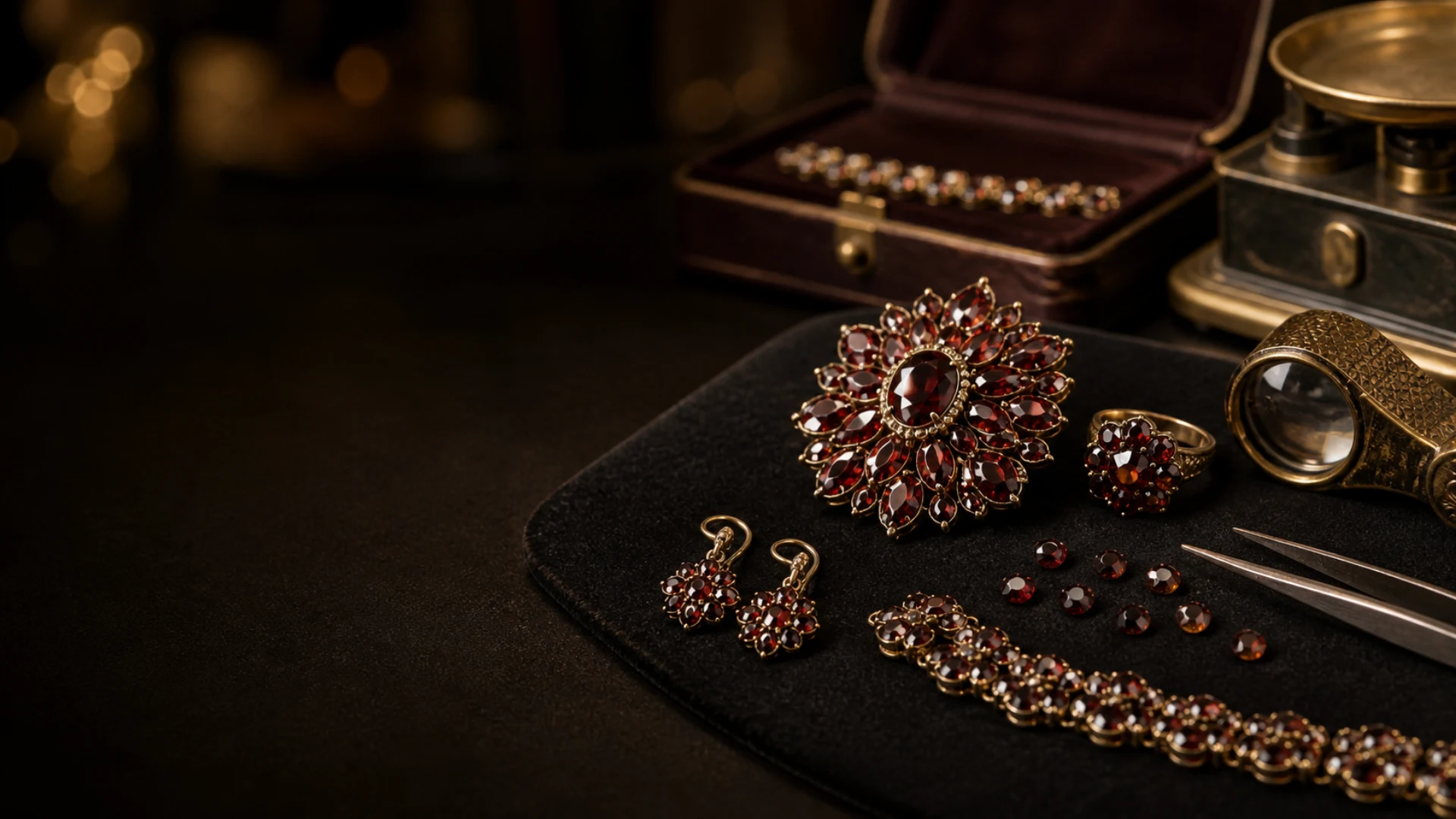
With older garnet jewellery, the overall composition matters. The traditional dense setting of small stones, the original clasp and a preserved set can mean more to the market than the same stones removed from the construction.
2. Checking the metal, hallmarks and maker's marks
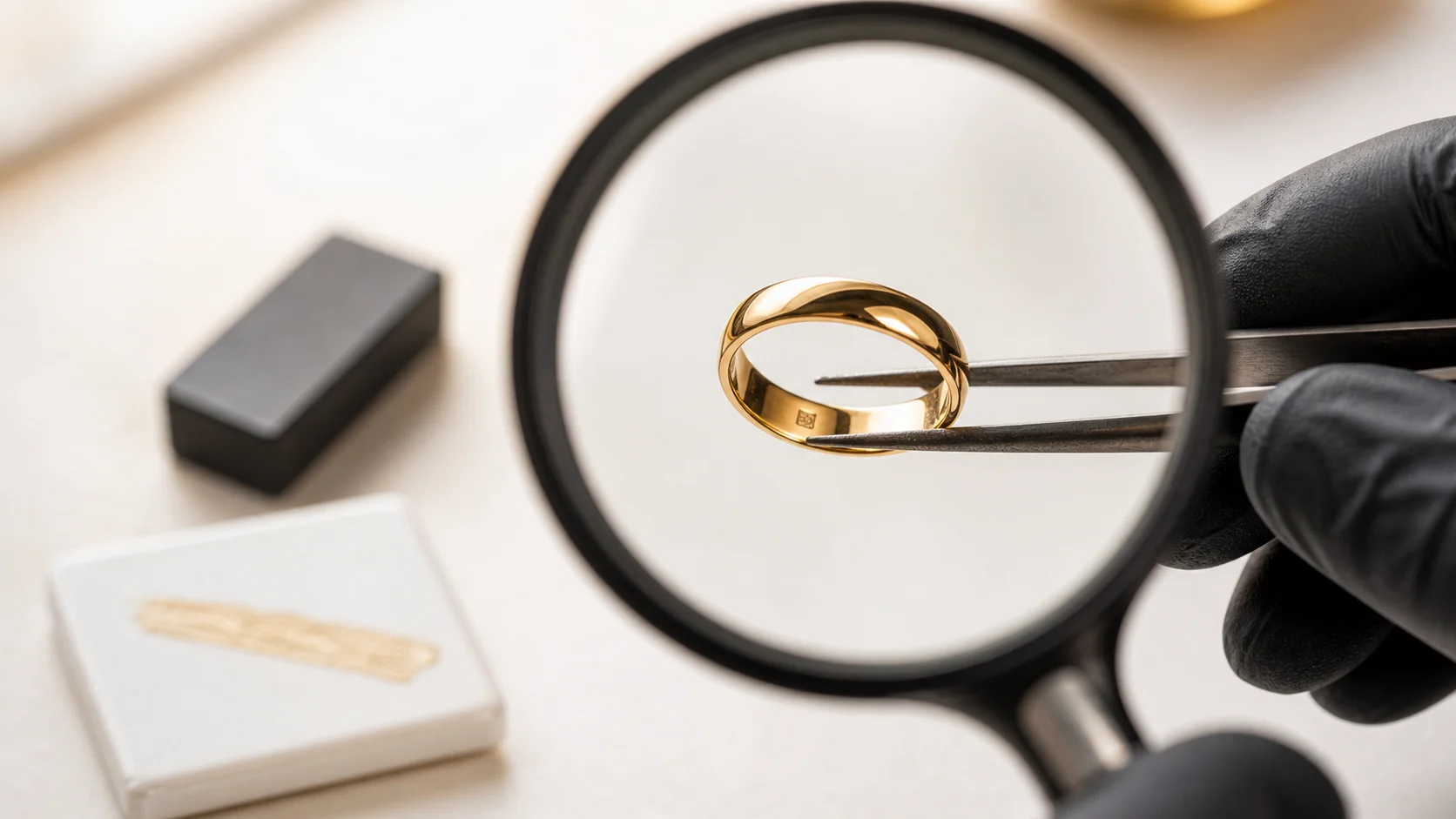
Garnet jewellery was made in gold, silver, tombac and other alloys. The first step is therefore to look for hallmarks, fineness numbers and maker's marks and to verify the material of the individual parts. For gold and silver, the purity and the countable weight of the metal are assessed; for tombac, the value relies more on the stones, the age, the craftsmanship and the preservation of the whole.
The maker's mark can help determine the origin and the period. Granát Turnov states that it guarantees the authenticity of garnets in its products with a certificate and the maker's mark "G". This certificate relates to the specific production of the cooperative; for other or older jewellery, the origin is assessed separately. Details are described in the official information from Granát Turnov.
3. Assessing the stones
The valuer examines the colour, transparency, size, cut, number of stones, consistency within a set and the way they are set. At the same time they look for cracks, abrasions, loose or replaced stones. With Czech garnet, it is difficult for a layperson to determine the origin by sight alone; a larger red stone may be a different kind of garnet, and the colour appearance is also affected by lighting and the construction of the jewellery.
Any centre stones are dealt with separately. Historical garnet jewellery can combine small pyropes with a larger almandine or another material. Each component must therefore be described, not automatically labelled a Czech garnet.
4. Age, style and craftsmanship
With an antique piece, the period, the quality of the handwork, the originality of the construction and the possible maker are examined. An Art Nouveau, Art Deco or First Republic piece can be valued as a collectible whole. A newer serial product usually relies more on the material, condition, documented origin and current demand.
A repair is not automatically a problem. A sensitively performed clasp replacement can be practical, while crude soldering, replaced stones or a rebuild of an original brooch can reduce the collector value.
5. Condition and completeness
The firmness of the setting, deformation of the metal, the function of the clasp, the surface, cracks and missing stones are checked. With earrings, cufflinks and sets, it is important whether the pairs and parts are complete. The original box or a credibly documented history can increase the attractiveness of the whole.
Damaged jewellery can still have significant value. However, have the original condition assessed first and only then order a repair. An unsuitable intervention can cost more than it adds and can remove historical features.
6. How the final offer is created
The final amount can combine several components:
- the value of the gold or silver according to purity and countable weight,
- the quality, number and condition of the stones,
- the maker, age, craftsmanship and collector demand,
- the condition, completeness and the cost of any repair,
- the saleability of the jewellery as a preserved whole.
For quality antique or marked jewellery, the offer should therefore not be just "the price of the metal per gram". The valuer should explain whether they are valuing the whole or the individual materials, and which properties influenced the offer the most.
How long the valuation takes and what follows
An ordinary individual piece can be preliminarily assessed during one visit. A large estate, an unusual antique piece or jewellery requiring further verification may need more time. Before handing anything over, have the scope of the assessment and the conditions explained.
In our Prague shop, the valuation and buying of Czech garnets is non-binding. General information about price and authenticity can be found in the article Czech garnet: price, authenticity and buying.